
Staging vs. Interior Design: Why This Isn't About Your Taste

This comes up almost every time I walk into a consultation: a seller looks at a proposed sofa, or a rug, or a furniture layout, and says some version of "that's not really my style" or "I would never put a chair there." And they're usually right — they wouldn't. That's not a mistake. That's the point.
Interior Design Is Built Around One Person/Family. Staging Is Built Around Everyone.
Interior design starts with a specific person's taste, habits, and how they actually want to live in a space — their favorite colors, their collections, the exact reading chair they want in the exact corner where the light hits at 4pm. It's deeply personal, and it should be. You're going to live there.
Staging starts from a completely different question: what layout and style will help the widest possible range of strangers picture themselves living here, long enough to write an offer? It's not designed for your taste. It's designed to be broadly appealing enough that it doesn't get in anyone else's way — including buyers whose taste is nothing like yours, and nothing like mine either.
"Neutral" Isn't a Lack of Vision — It's the Strategy
Sellers sometimes read a neutral staging plan as boring, or as evidence that not much thought went into it. It's the opposite. Neutral is a deliberate choice to remove anything that could make a buyer mentally check out — a bold color they hate, a furniture style that feels dated to them, a layout that only makes sense for one very specific way of living. The more distinctive and personal a space feels, the smaller the pool of buyers who can picture themselves in it. Staging is optimized to shrink that friction, not to reflect anyone's personal aesthetic — mine included.
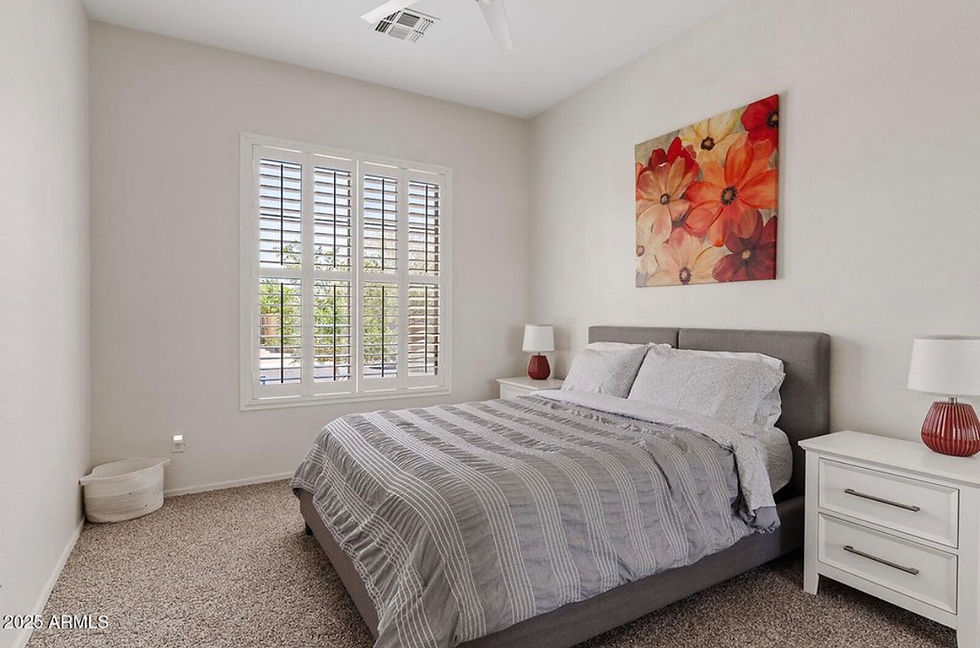
This is a great example. This client? LOVED the red wall. Most buyers? Not so much.

So, what did we do? We neutralized the red wall, but kept some of her favorite colors in the mix in a way that wasn't offensive and didn't require a remodeled room.
Furniture Placement Isn't Random, Even When It Feels Unfamiliar
This is where I hear the most pushback: "why is the bed against that wall, I'd never put it there" or "why is there a chair in the corner nobody would actually sit in." Staging furniture placement is usually solving a specific problem — showing a room's true scale, creating a walking path that photographs well, or making an oddly shaped room read clearly instead of confusingly. It's not always how a real resident would arrange their life in the space day to day. It's how the room communicates most clearly to someone walking through for eight minutes trying to decide if they can picture living there.
You're Not the Client the Staging Is For
This is the part that's hardest to hear, and I say it as gently as I can: once a home is on the market, the furniture and layout aren't being chosen for you anymore. They're being chosen for the buyer who hasn't walked in yet. That's not a judgment on your taste — your home reflected exactly how you wanted to live in it, which is exactly what it was supposed to do. Staging has a different job for a different, temporary phase: getting the highest and fastest offer from someone who isn't you.
Where Your Input Still Matters
None of this means your preferences disappear entirely. If there are pieces you love that happen to also work for staging, we use them. If there's a direction you're uncomfortable with for a specific reason, that's worth discussing. The goal isn't to ignore you — it's to keep the process anchored to what will actually help the sale, rather than defaulting back to personal taste once things start to feel unfamiliar.
"But I'm the One Paying for This"
This is a fair feeling, and it deserves a real answer, not a brush-off. You're the client. Your money is funding the project. It makes sense that it feels strange when a recommendation doesn't go the direction you'd have picked yourself.
Here's the distinction that actually matters: paying for a service means your considerations get heard, weighed, and factored in — it doesn't mean every decision defaults to personal preference over professional judgment. That's true of most expertise you'd pay for. You can hire a great accountant and still not personally choose which deduction strategy is optimal. You can hire an architect and still not decide the load-bearing specifics. Paying for expertise is exactly what makes it reasonable to expect the final call to reflect that expertise — not despite paying for it, but because of it.
The goal I'm working toward on your behalf isn't "make the seller happy with the decor." It's "get this house sold for the most money in the least time." Those two goals usually overlap, but when they don't, I owe you my honest read on what actually moves the second number — because that's what you're really paying for, even when it doesn't feel like it in the moment over a specific chair or rug.
That said, "we don't take your input 100%" and "we don't listen" are two different things, and I want to be clear about which one is true. Every consultation starts with hearing what you're attached to, what feels important to you, and why — and a good amount of that does make it into the final plan. What doesn't always make it in is a preference that would work against the sale itself. That's not a dismissal of your voice. It's the same reason you're paying for a second opinion in the first place: to get guidance you wouldn't have landed on alone.
The Bottom Line
Staging that feels a little impersonal, a little neutral, a little "not quite you" isn't staging that missed the mark — it's often staging doing exactly what it's supposed to do. The version of your home that gets the best offer is very rarely the version you'd choose to live in yourself, and that's not a flaw in the process. It's the whole strategy.
The Gilded Cactus provides strategic home staging throughout the Phoenix metro area — built around what helps a home sell, not around any one person's personal taste, including our own.


Comments