
Staging for Flippers: How to Protect Your Renovation ROI

Every dollar in a flip is calculated against an expected sale price and timeline — and every extra day on the market chips away at that margin through carrying costs, holding costs, and the compounding risk of needing a price reduction. Staging is one of the cheapest tools to protect against that erosion, and investors focused primarily on the renovation often underuse it.
The Math Investors Often Miss
It's easy to view staging as an optional expense on top of an already significant renovation budget. But the comparison that matters isn't "renovation cost vs. renovation cost plus staging" — it's "cost of staging vs. cost of extra weeks on market." Every additional month a flip sits unsold means another mortgage or hard money payment, another month of insurance and utilities, and another month of market risk if conditions shift. Staging is typically a small fraction of those combined holding costs.
Buyers Can't Evaluate a Renovation They Can't Picture Living In
This is the core issue: an empty renovated home asks buyers to do two things at once — appreciate the quality of the finishes and imagine their own life in the space, with zero visual cues to help with the second part. Most buyers can manage one of those tasks well. Very few can do both simultaneously in an empty room, which means a genuinely excellent renovation can still underperform simply because buyers never fully connect with it.
Staging Also Helps Justify the Price Point
Flips are often priced at or near the top of a neighborhood's comparable range, reflecting the cost of the renovation. Buyers weighing that price against older, unrenovated comps need to clearly see what they're paying for. Staging helps make the case visually — showing exactly how the open floor plan works, how much storage the new kitchen offers, how the primary suite functions as a retreat — supporting the higher price point instead of leaving buyers to guess whether it's justified.
Speed Matters More for Investors Than Traditional Sellers
A traditional seller has some flexibility on timeline. An investor's return is directly tied to days on market. Staging isn't just about final sale price for a flip — it's about closing the gap between listing day and offer day as fast as possible, since every week saved is money kept rather than spent on holding costs.
Working Staging Into the Renovation Budget
The most efficient approach is factoring staging into the project budget from the start rather than treating it as an afterthought once the renovation wraps. Because staging uses an inventory-light model rather than a large owned furniture inventory, you can stage a flip without the overhead of storing and maintaining furniture between projects—keeping costs proportional to the investment rather than adding a fixed cost per flip.
The Bottom Line
A renovation creates the value. Staging is what makes sure buyers actually see and pay for that value quickly, instead of losing weeks (and margin) to a vacant showroom that's hard to connect with emotionally. For investors, staging isn't a design expense — it's a holding-cost reduction strategy.
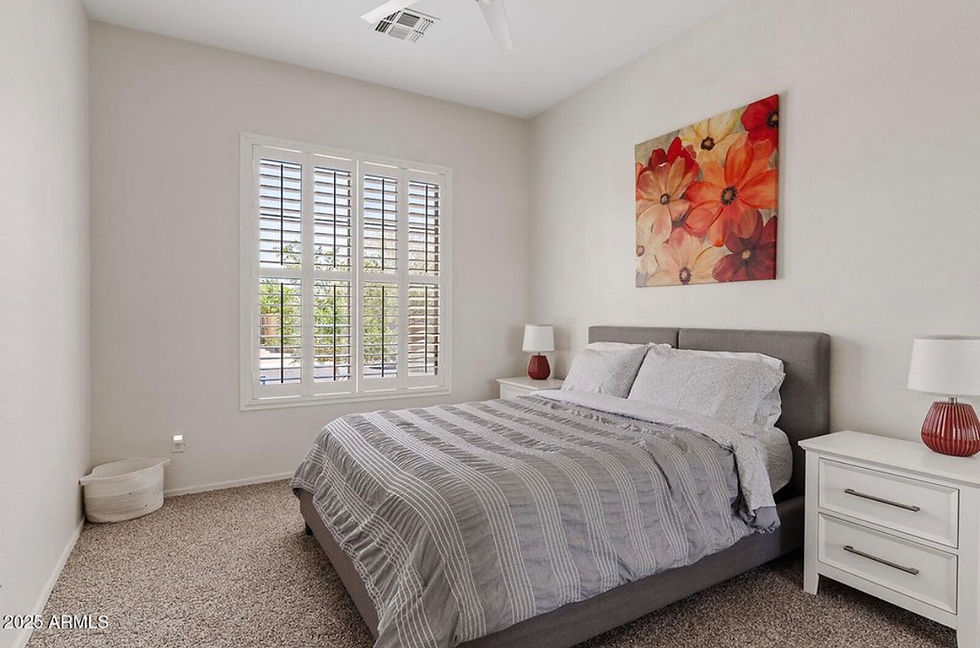
The Gilded Cactus works with Phoenix-area flippers and investors on staging that's scaled to protect renovation ROI and minimize time on market, without requiring a warehouse of owned inventory.

Comments